
In RiverCross Diorama, non ci limitiamo a progettare inserti: noi ingegnerizziamo esperienze.
Ogni vassoio, ogni scomparto, ogni fessura per token deriva da scelte deliberate fatte millimetro per millimetro.
Questo post riguarda il nostro modo effettivo di pensare e lavorare.
Le cose che non compaiono nelle foto del prodotto ma che modellano ogni singolo inserto che realizziamo.
sulle pareti del vassoio
per inserto
componenti di gioco reali
🎮 Sei principi. Ogni inserto.
Questi non sono valori aspirazionali su un muro. Sono i vincoli reali entro cui progettiamo, ogni volta, per ogni gioco. Se un inserto non può soddisfare tutti e sei, non viene spedito.
1 Iniziamo dal gioco, non dalla scatola
Prima che una singola linea venga disegnata nel software, giochiamo. Esaminiamo il regolamento, maneggiamo ogni componente e capiamo come i giocatori interagiscono effettivamente con i pezzi durante l'allestimento, il gioco e lo smontaggio. L'inserto deve servire il gioco, non il contrario.
Un gioco come Darwin's Journey Collector's Edition ha plance giocatore a doppio strato, una cascata di mini espansioni e componenti che funzionano in modo diverso in diversi punti del gioco. Non c'è modo di progettare un layout di vassoio per questo da un foglio di calcolo. Bisogna giocarlo.
2 Le tolleranze non sono suggerimenti
La stampa 3D FDM ha variazioni nel mondo reale. Progettiamo ogni fessura e vassoio con tolleranze indipendenti dalla stampante, quindi testiamo su più macchine e tipi di filamento. Un token che rotola fuori dal suo scomparto è un fallimento. Una carta che non scorre fuori è un fallimento. Iteriamo finché nessuno dei due accade.
Questo è il motivo per cui i nostri inserti funzionano sia che li stampiate voi stessi dai file STL, sia che li riceviate già pronti. Le tolleranze sono incorporate nel design, non legate a una stampante specifica.
3 Pensiero "espansioni prima di tutto"
La maggior parte dei giochi cresce. Progettiamo i nostri inserti per gestire le espansioni fin dal primo giorno, anche se non le possedete ancora. Spazi riservati, layout modulari dei vassoi e componenti impilabili fanno sì che il vostro inserto non diventi obsoleto nel momento in cui arriva una nuova scatola.
Il nostro inserto per Scythe contiene il gioco base più Invaders from Afar e The Wind Gambit. Il nostro inserto per Hegemony è costruito per il set completo di espansioni. Acquistare oggi l'inserto del gioco base non dovrebbe significare acquistare un nuovo inserto domani.
4 Le carte imbustate sono la norma
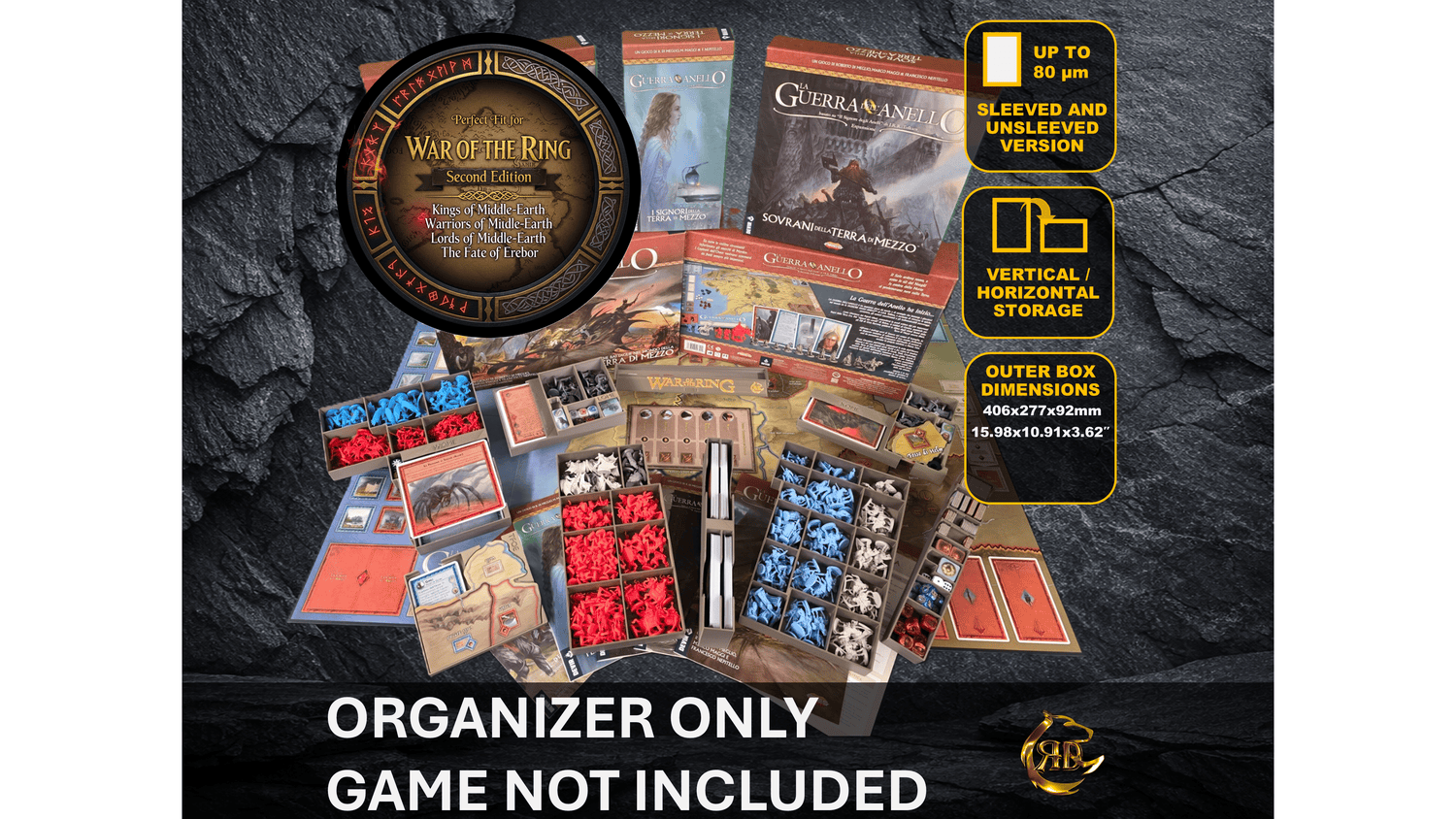
Presupponiamo che imbustiate le carte. Ogni slot per carte in ogni inserto RCD è dimensionato per carte imbustate a 80 micron. Se giocate senza bustine, l'aderenza è comunque perfetta, ma non lasciamo mai gli utenti delle bustine a cercare soluzioni. In alcuni casi, accettiamo 100 micron. Non siete sicuri? Inviateci un messaggio prima di ordinare.
5 Il coperchio deve chiudersi
Sembra ovvio. Non lo è. In RCD, il coperchio si chiude completamente con tutto all'interno, imbustato e pronto per la prossima sessione. Se non si chiude, il design torna al tavolo da disegno. Non negoziabile.
6 L'estetica è parte della funzione
Un inserto ben organizzato dovrebbe anche essere gratificante da guardare. Linee pulite, altezze costanti delle pareti, spazio negativo deliberato: queste sono scelte di design, non effetti collaterali. Quando apri la scatola e tutto è esattamente dove dovrebbe essere, quel momento di ordine visivo fa parte di ciò per cui stiamo progettando.
- Michele, RiverCross Diorama
🔬 Cosa succede prima che tu veda un elenco di prodotti?
Ogni inserto passa attraverso: mappatura concettuale, progettazione CAD, prima stampa, test di adattamento dei componenti, iterazione, validazione finale, fotografia, inserimento nell'elenco. Dal primo schizzo al prodotto finito, un inserto complesso può richiedere dalle 3 alle 6 settimane. Non ci affrettiamo.
Sfoglia i risultati nella nostra collezione di inserti per giochi da tavolo.
📖 Vuoi sapere cosa cercare quando acquisti un inserto?
Sapere come costruiamo è una cosa. Sapere quali domande porre prima di acquistare da chiunque altro è un'altra. Trattiamo la checklist completa, le dimensioni delle bustine, il supporto per le espansioni, la chiusura del coperchio e altro ancora, in Come scegliere l'inserto per giochi da tavolo giusto per il tuo gioco.
Hai un gioco per cui ti piacerebbe vedere un inserto RCD? Inviaci un messaggio. Leggiamo ogni singola richiesta.





0 commenti